

How Commonwealth Fusion System Redefining Fusion Development in 2026
The year has barely begun, but Commonwealth Fusion Systems (CFS) is already reshaping the conversation around fusion energy. Long regarded as one of the most credible commercialization players in the field, CFS is entering 2026 with momentum that signals more than technical progress. Fusion today is no longer defined by laboratory experiments and scientific possibility, by factories, supply chains, industrial partnerships, and infrastructure-scale capital. CFS now sits firmly at the center of that transformation.
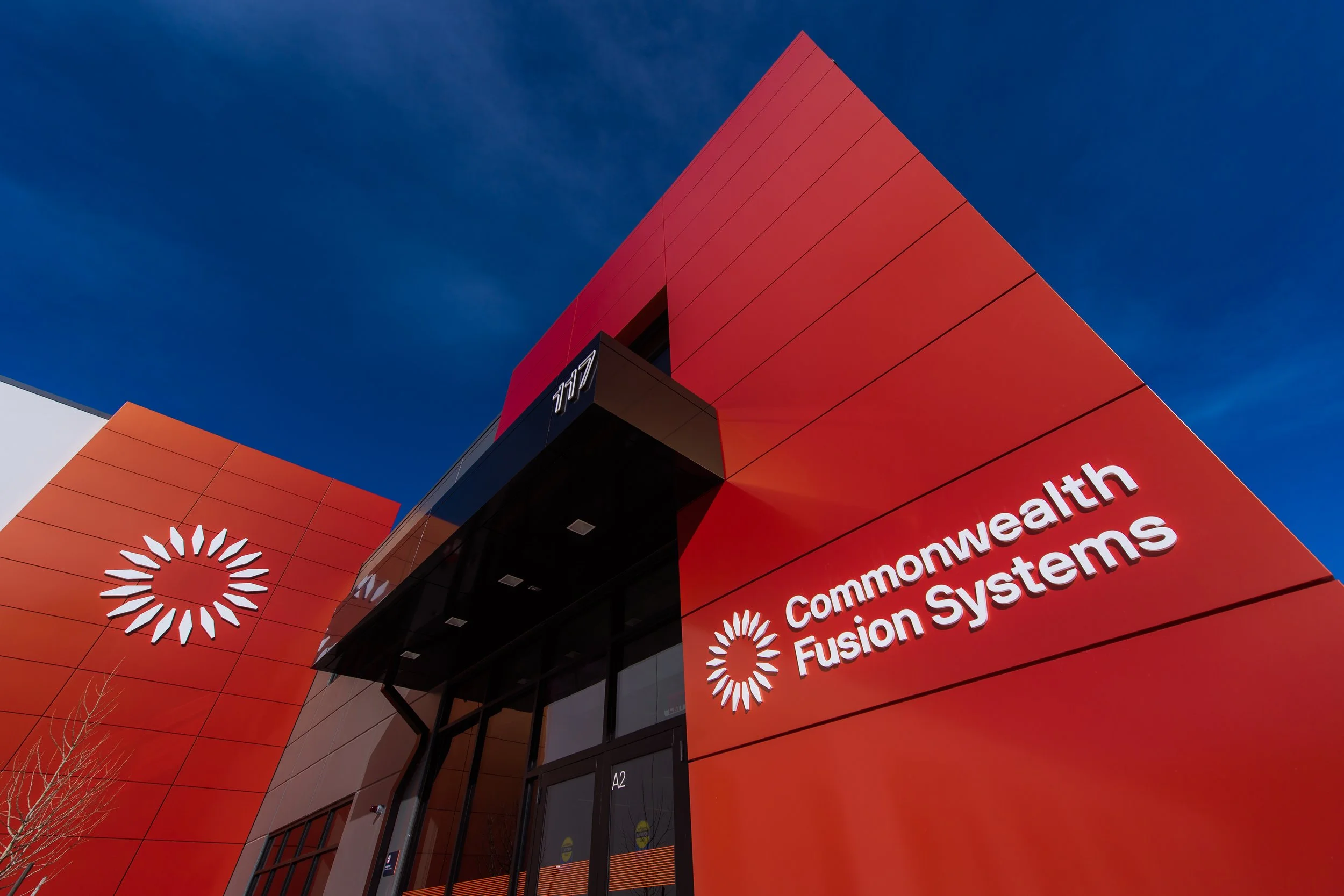
Commonwealth Fusion System: The Industry Trend Setter
Between July 2025 and early January 2026, CFS released a sequence of updates that marked a fundamental shift in fusion development. These milestones move the SPARC demonstration machine from a blueprint toward a physical reality.
Delivery of SPARC’s Vacuum Vessel
CFS received the first 48-ton half of SPARC’s vacuum vessel. This massive steel structure is the "heart" of the machine, designed to withstand temperatures of 100 million degrees Celsius. Its arrival at the Devens, MA headquarters signifies that the most complex structural components of the reactor are now entering final assembly
Installation of the First Toroidal Field (TF) Magnet
Announced at CES 2026, CFS successfully installed the first of 18 high-field superconducting magnets. These 20T magnets are the key to SPARC’s compact size, and the company expects to complete the full ring by the end of summer 2026.6
Record-Breaking Capital Position
By the end of 2025, CFS solidified its position as the best-funded private fusion company, with total capital raised nearing $3 billion. This includes a recent $863 million Series B2 round supported by major tech and energy players
Strategic Industrial Partnerships
In a landmark move for the industry, CFS partnered with NVIDIA and Siemens to build a high-fidelity "digital twin" of SPARC. Utilizing NVIDIA’s Omniverse and Siemens’ Xcelerator software, CFS is now able to simulate reactor conditions in real-time, drastically reducing the time needed for physical testing
US Government Validation
The Department of Energy (DOE) officially validated CFS’s magnet performance. Following this, Energy Secretary Chris Wright visited the Devens facility, highlighting the project as a cornerstone of American energy leadership.
An Inflection Point for Fusion
The progress with SPARC proves that the greatest barriers to fusion are now engineering and logistics, not just physics. By demonstrating that high-field superconducting magnets can be mass-produced and that AI-driven digital twins can manage complex plasma control, CFS is turning fusion into a replicable industrial product.
The collaborations with NVIDIA, Siemens, and Google DeepMind are particularly revealing. These are not just research agreements; they focus on industrial automation and real-time reactor control. By integrating AI into the physical operation of the reactor, CFS is adopting the operating model of modern high-tech manufacturing rather than traditional power plant construction.
All of this is backed by commercial confidence. In late 2025, the Italian energy giant Eni signed a landmark $1 billion+ Power Purchase Agreement (PPA) to buy power from the future ARC commercial plant—the first time a major global energy company has made such a massive financial commitment to fusion offtake
What Could be Unlocked in the Next Six Months
As we move through 2026, fusion is stepping into the same planning conversations as solar, wind, and advanced fission. The next six months will be defined by the "factory rhythm" of SPARC's assembly.
Full Magnet Integration: By mid-2026, the installation of all 18 toroidal field magnets will be complete, allowing for the first integrated cryogenic and power-supply tests.
Digital Twin Optimization: The AI models developed with Google and NVIDIA will begin running predictive simulations on the fully assembled hardware, preparing the team for the "first plasma" milestone.
Site Development for ARC: With the SPARC assembly nearly finished, focus will shift toward the ARC commercial plant in Virginia, where the transition from "demonstration" to "grid-scale power" begins in earnest.

